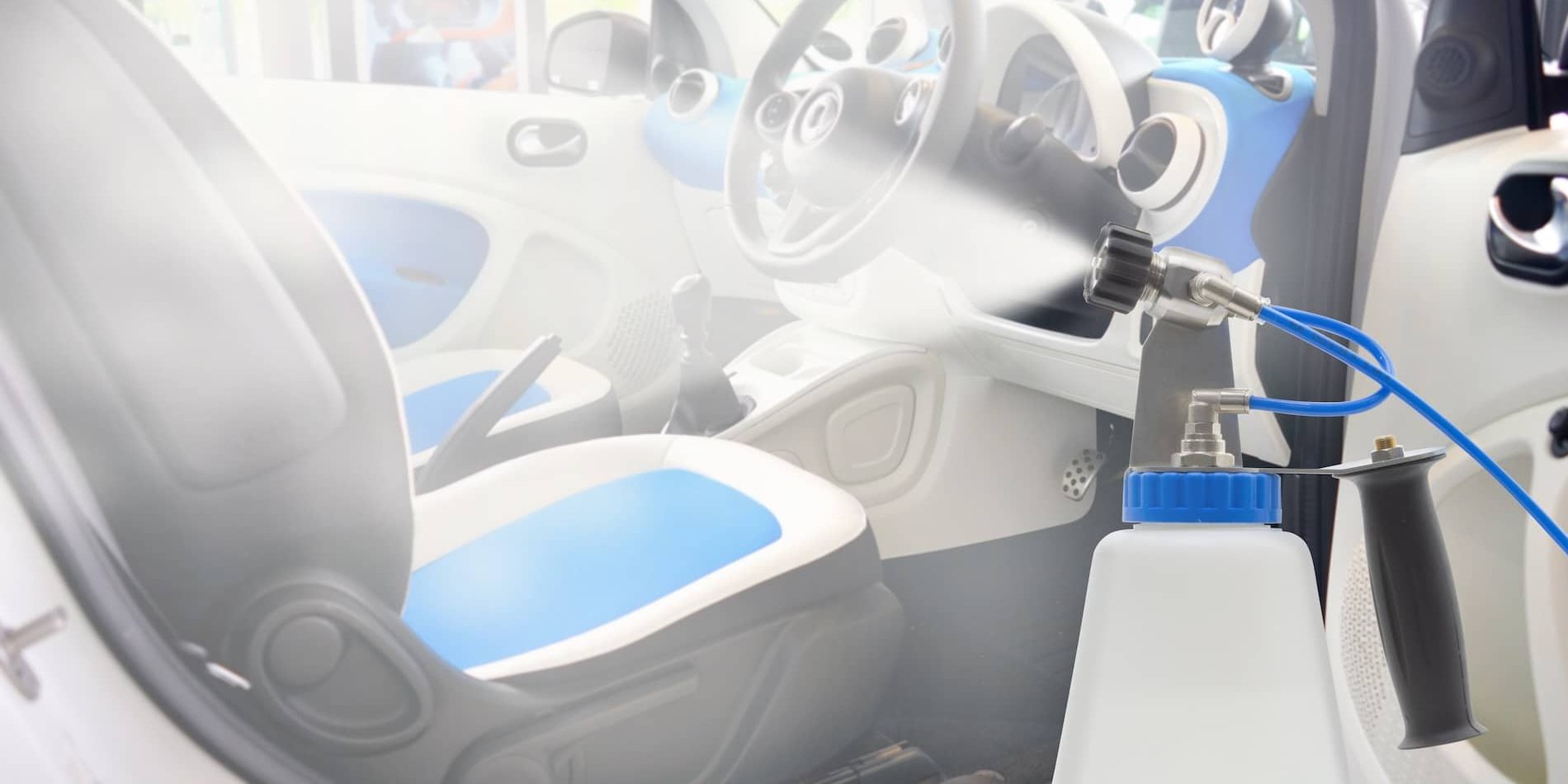
The requirements for professional room and surface disinfection have increased significantly in recent years. Companies, public institutions, and service providers require methods that are reliable, cost-effective, and at the same time gentle on materials.
Cold fog technology represents a highly efficient solution in this context. Through the targeted atomization of liquid agents such as disinfectants, odor neutralizers, or insecticides, comprehensive surface coverage is achieved, safely reaching even hard-to-access areas.
This article explains the technical functionality, typical fields of application, as well as the economic and practical advantages of cold fog technology.
Cold fog technology is based on mechanical atomization using compressed air. In contrast to thermal fogging methods, the active substance is not exposed to thermal stress. This preserves the chemical stability of the ingredients.
The effectiveness of the application depends largely on the droplet size generated. Modern cold fogging devices produce aerosols with a diameter of less than 30 micrometers. In technical literature, this range is often referred to as ULV, which stands for Ultra Low Volume. This method enables maximum suspension capability with minimal use of agents.
The higher the operating pressure, the finer the atomization. For stable operation, an oil-free compressor with a delivery rate of approximately 180 to 220 liters per minute at a working pressure of 3 to 6 bar is required.
The coverage range is remarkably efficient. With one liter of active solution, a room volume of approximately 60 cubic meters can be treated, which corresponds to around 25 square meters of floor space. Alternatively, this amount is sufficient to disinfect the interior of five to seven passenger cars.
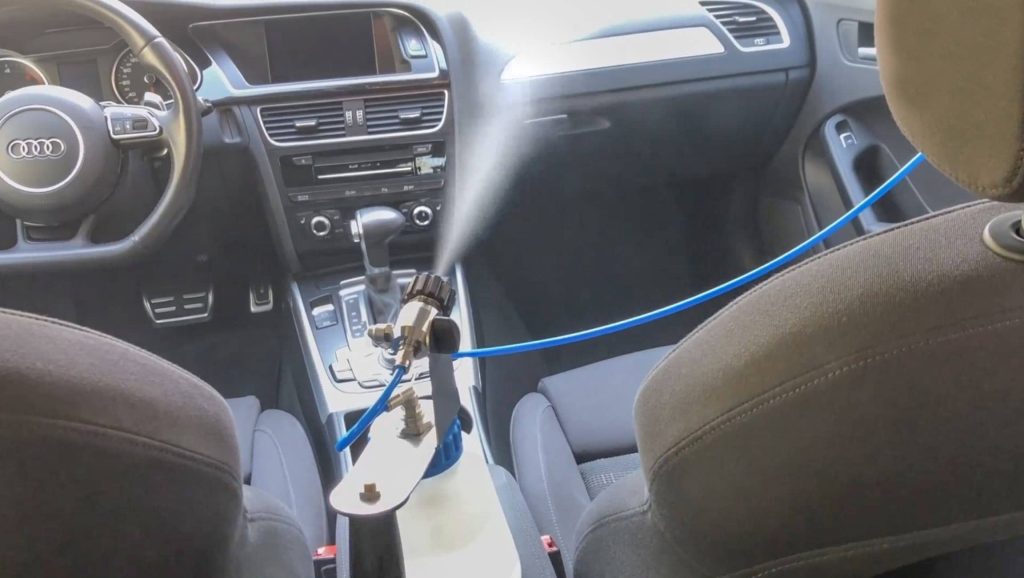
A key advantage of cold fog technology is complete coverage. Due to the microscopically fine droplets, the aerosols reach even the smallest crevices, ventilation ducts, and complex geometries.
Unlike manual wipe disinfection, not only visible surfaces are treated. Hard-to-access areas are also reliably covered.
The so-called dry fogging ensures that surfaces or electronics do not become saturated with moisture. When used in accordance with regulations, the method is gentle on materials and safe for sensitive components.
The possible applications are diverse across industries and economically attractive.
In taxis, rental cars, emergency vehicles, or public transportation, the technology enables efficient disinfection and odor elimination. The treatment of air conditioning systems and ventilation ducts is particularly relevant.
In production facilities, the method is used for germ reduction. In stables or greenhouses, it can also be applied for insect control.
Here, the technology is used for dust binding and as part of mold remediation measures.
Offices, spas, schools, or other facilities benefit from rapid and comprehensive decontamination without long downtime.
Due to the high coverage per liter of active solution, the method is particularly economical and scalable.
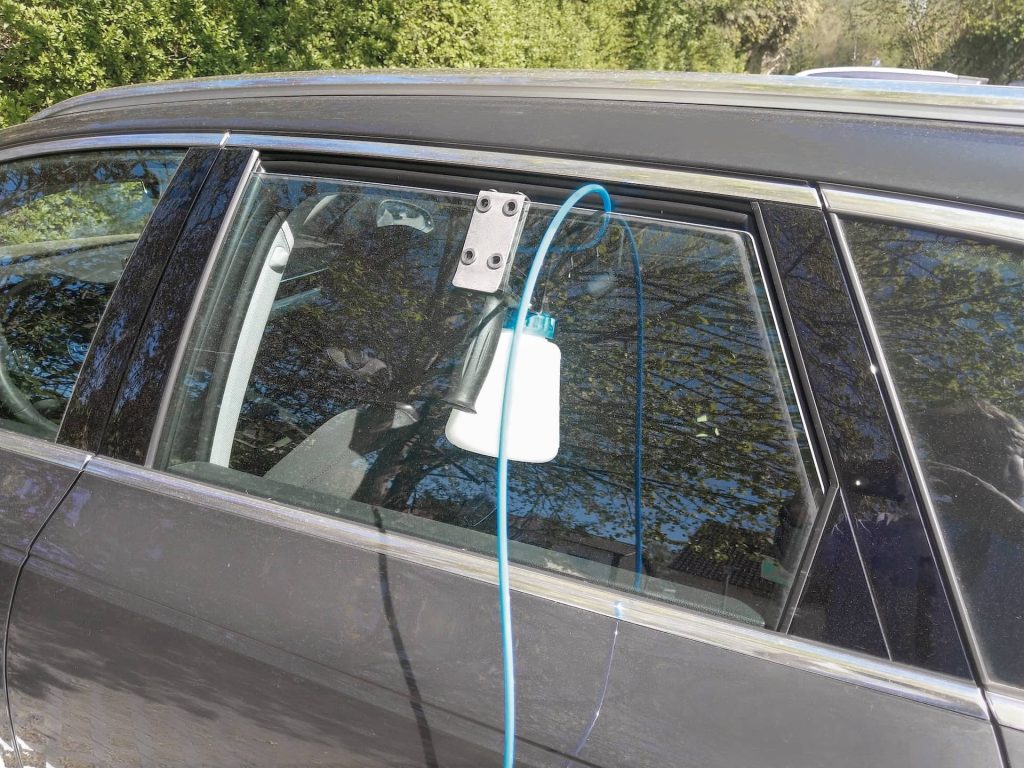
For professional vehicle preparation, a structured process has been established that ensures reproducible results.
First, thorough mechanical pre-cleaning is carried out, as disinfection does not replace cleaning. The vehicle is then positioned in a cool, well-ventilated area. The cabin air filter is removed and the housing cleaned separately if necessary.
The amount of active agent is selected depending on vehicle size and contamination level. The device is connected to an oil-free compressor.
In the primary treatment, the disinfectant is introduced via the intake opening while the blower is running until the interior is visibly fogged. The device is then placed inside the vehicle. The blower runs in recirculation mode at approximately 20 degrees Celsius, all vents are opened, and the doors are closed until full saturation is achieved.
After switching off the device, the active agent circulates in the interior for two to five minutes. This is followed by cross-ventilation by opening all doors and the trunk. Finally, a new cabin air filter is installed. After approximately 15 minutes, the vehicle is ready for use again.
This structured procedure enables a high service throughput rate with consistent quality.
Cold fog technology offers increased user safety, as the process is automated and direct contact with the active agent is minimized. Nevertheless, mandatory protective measures must be observed.
The room must be vacated immediately after fogging begins in order to avoid inhalation of aerosols. When entering fogged areas, personal protective equipment is required. This includes respiratory protection masks of class FFP2 or FFP3 as well as suitable eye protection.
For fire and explosion protection reasons, aqueous and non-flammable solutions should preferably be used. This minimizes risks in areas with electrical installations or air conditioning systems.
When applied in accordance with regulations, the method is safe for electronics and sensitive surfaces.
In addition to hygienic effectiveness, cold fog technology offers significant economic advantages.
Time efficiency enables short processing times and high throughput rates in the service sector. Chemical consumption is minimized through fine distribution and precise dosing.
When applied correctly, no visible residues remain on upholstery or dashboards. This reduces the need for post-processing.
For medium-sized companies, this means predictable processes, reproducible results, and calculable costs per treatment unit.
Efficient room and surface disinfection using cold fog technology combines technical precision with economic efficiency. Through ULV fogging with droplet sizes below 30 micrometers, complete coverage of complex structures is achieved. At the same time, chemical usage remains low and material compatibility high.
Companies benefit from short treatment times, high process reliability, and versatile applications across a wide range of industries.
| Criterion | Description | Advantage |
|---|---|---|
| Process | Mechanical atomization with compressed air | No thermal stress |
| Droplet size | Below 30 µm, ULV range | High suspension capability |
| Coverage | 1 liter for approx. 60 m³ | Efficient use of agents |
| Wetting | Reaches crevices and ventilation ducts | Complete surface coverage |
| Surfaces | No saturation | Gentle on materials |
| Safety | Automated process | Reduced user contact |
| Economic efficiency | Short processing times | High service throughput rate |