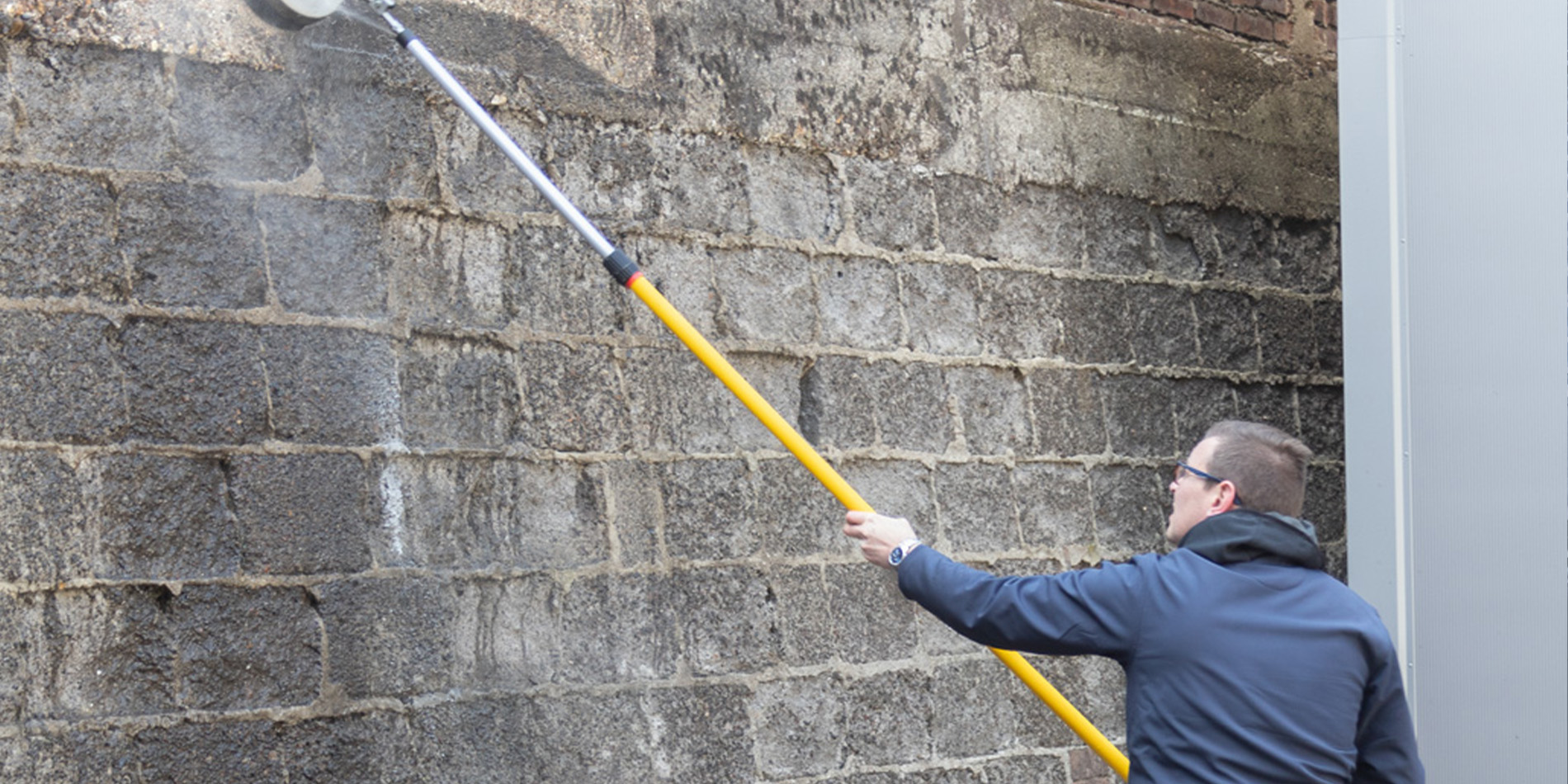
Spray equipment – consisting of the lance (spray wand), the high-pressure gun and the sealing system – is the central human-machine interface in professional high-pressure cleaning. Correct material choice, preventive maintenance with repair kits, and consistent frost protection determine the safety, service life and economic performance of the equipment.
In professional high-pressure cleaning – from façade care to municipal cleaning – the spray equipment is the decisive link between operator and machine. It typically comprises the spray wand (also called lance or jet pipe), the high-pressure gun, and all associated sealing and safety components. To deliver maximum performance while protecting both the operator and the material, maintenance and material selection must meet the highest standards.
When selecting spray wands, stainless steel is the only viable choice in the professional segment. A decisive but often underestimated factor is weight: a stainless-steel spray wand designed for an operating pressure of 6,000 psi is around 17 % lighter than a comparable model made from galvanised mild steel.
This weight advantage delivers a major ergonomic benefit. As the lance gets longer, its centre of gravity shifts further away from the grip points and toward the nozzle. The resulting leverage effect places significant load on the operator’s muscles during long deployments. Every gram saved at the nozzle reduces the torque at the wrist – and with it the risk of fatigue and injury.
Corrosion resistance plays an equally central role. Even the smallest scratches in the coating of mild-steel pipes immediately trigger rust formation, while stainless-steel components remain stable over time even under aggressive chemicals or high humidity. This extends service life and keeps equipment fully functional through the off-season.
The high-pressure gun acts as the central human-machine interface. The priorities here are minimising trigger and holding forces and ensuring absolute sealing performance. High-quality guns combine engineering plastics, stainless steels and ceramics to guarantee a durable seal across both high- and low-pressure ranges.
A frequently neglected maintenance step is the complete drainage of the spray equipment before storage. Residual water can freeze at low temperatures and, due to water’s anomalous expansion, can cause cracks in the material. A failure of the gun’s automatic shut-off function caused by ice crystals can lead to life-threatening situations – pressure release fails and the jet remains uncontrolled.
Professional spray equipment is designed to be operated sustainably for many years through the use of repair kits. Wear parts such as valve seats, balls, O-rings, and seals are replaced selectively rather than swapping out the entire unit.
A semi-professional “standard gun” would fail within a very short time under the loads of professional service work due to seal or valve failure. Industrial components, by contrast, can be serviced in a targeted way: this lowers total cost of ownership, extends operating time per season, and reduces special waste.
The following intervals apply to wear parts in professional spray equipment. Under extreme conditions (hot water, aggressive chemicals, high-frequency use) intervals should be shortened accordingly.
| Type of use | Interval | Action |
| Standard (cold water) | 1,000 h / 1 year | Replace valve parts (seat, ball, O-rings). |
| Intensive (hot water / chemicals) | 500 h / 6 months | Full replacement using an original repair kit. |
| Major overhaul | 3,000 h / 3 years | Overhaul of the valve unit (ceramic / stainless steel). |