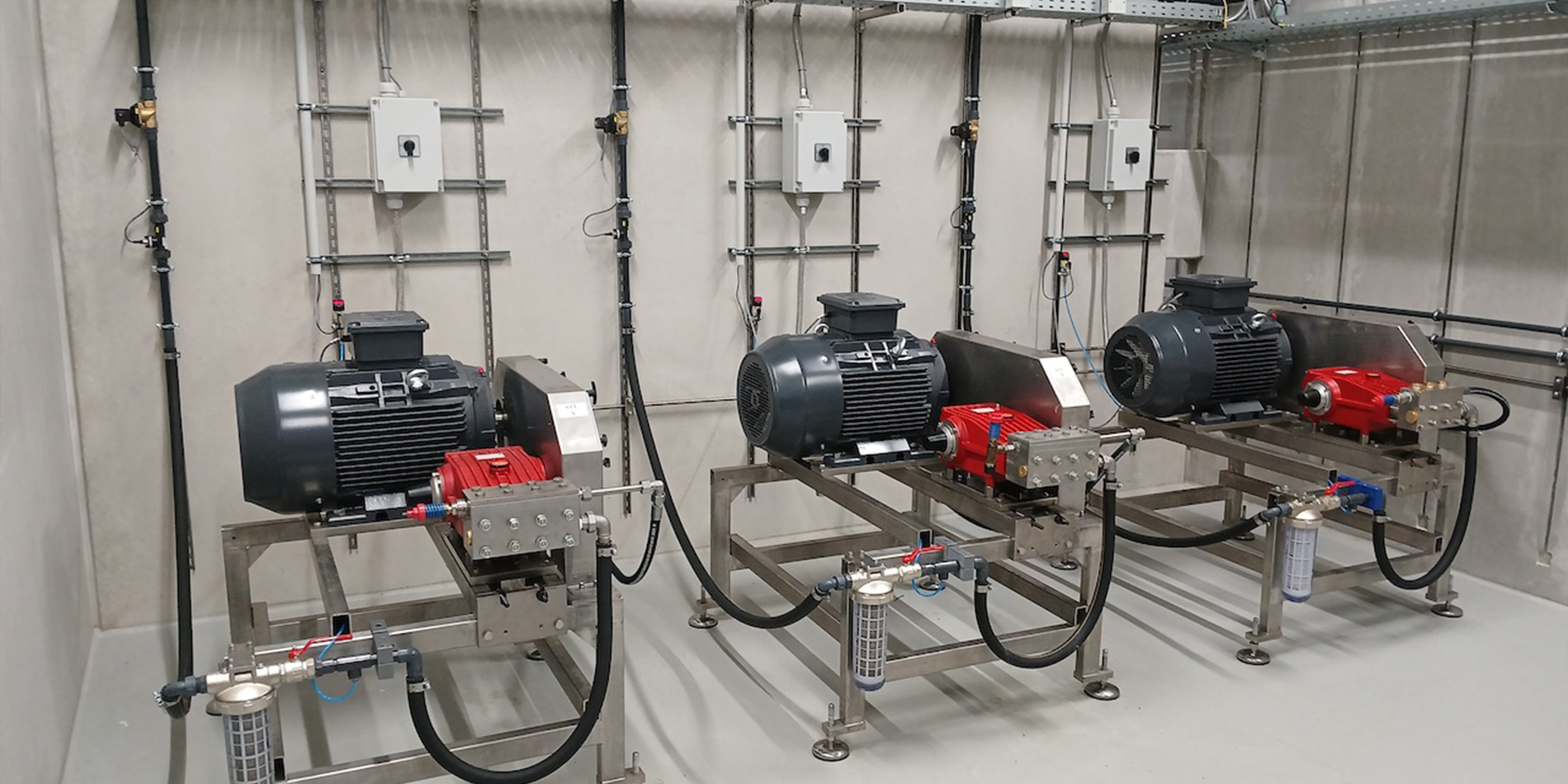
Anyone who develops and manufactures professional high-pressure components must be able to rely on one thing: dependable test results. At Suttner, quality control does not end with production. Before a product is put into service by the customer, it undergoes extensive endurance and stress testing in the company’s in-house testing facilities.
The key advantage: development, production, and quality assurance are all located under one roof. This enables new products to be tested directly after manufacturing under realistic operating conditions and continuously optimized. This close interaction is a fundamental element of Suttner’s quality philosophy and a clear commitment to Germany as a manufacturing location.
Professional high-pressure components are exposed to extreme stress during daily operation. High pressures, continuous switching cycles, temperature fluctuations, and aggressive media place the highest demands on materials and design.
To ensure long-term reliable performance, all Suttner products undergo comprehensive testing. The goal is to determine service life, verify safety margins, and ensure consistently high product quality. The insights gained flow directly into product development and form the basis for continuous improvements to both existing and new products.

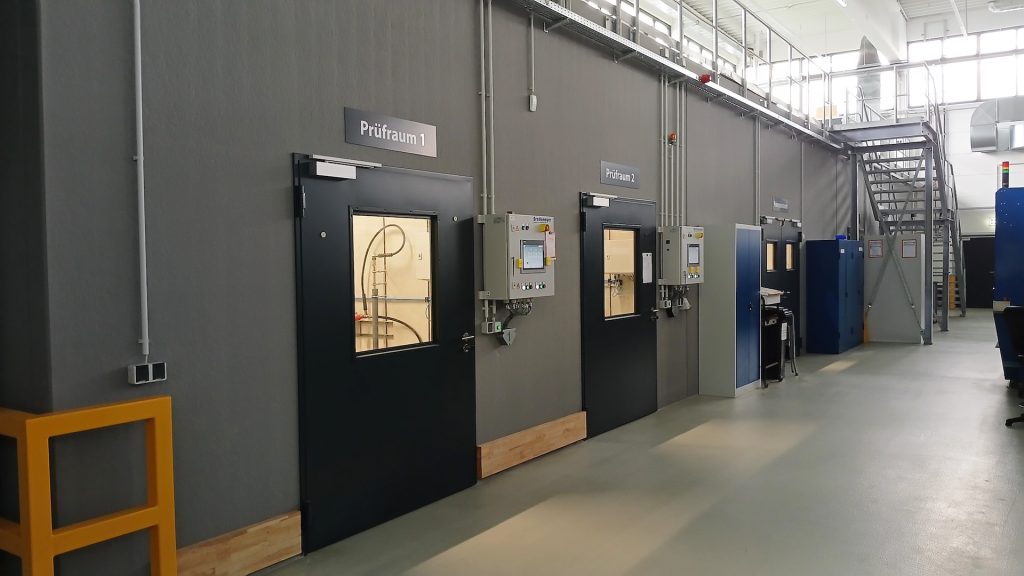
Suttner’s testing facilities are designed to meet the demands of modern high-pressure technology. A total of six test benches with a combined output of 180 kW are available. The systems can simulate a wide range of operating conditions:
This allows both standard applications and extreme operating scenarios to be reliably reproduced.
Every product must first prove that it can reliably perform its intended function. During functional testing, operating behavior, switching functions, and performance parameters are evaluated. This demonstrates whether the design, manufacturing process, and material selection meet the high demands of professional users.
In high-pressure applications, even minimal leakage can lead to malfunctions. Therefore, components are specifically tested for leak tightness. Even the smallest leaks are detected and analyzed. This ensures reliable and safe operation, even under continuous load.
In addition to normal operating conditions, components are deliberately pushed to their limits.
During burst pressure testing, components are exposed to pressures significantly higher than those encountered in actual operation. The objective is to determine structural safety margins and verify product durability.
These tests provide valuable insights for product safety and the development of future generations.
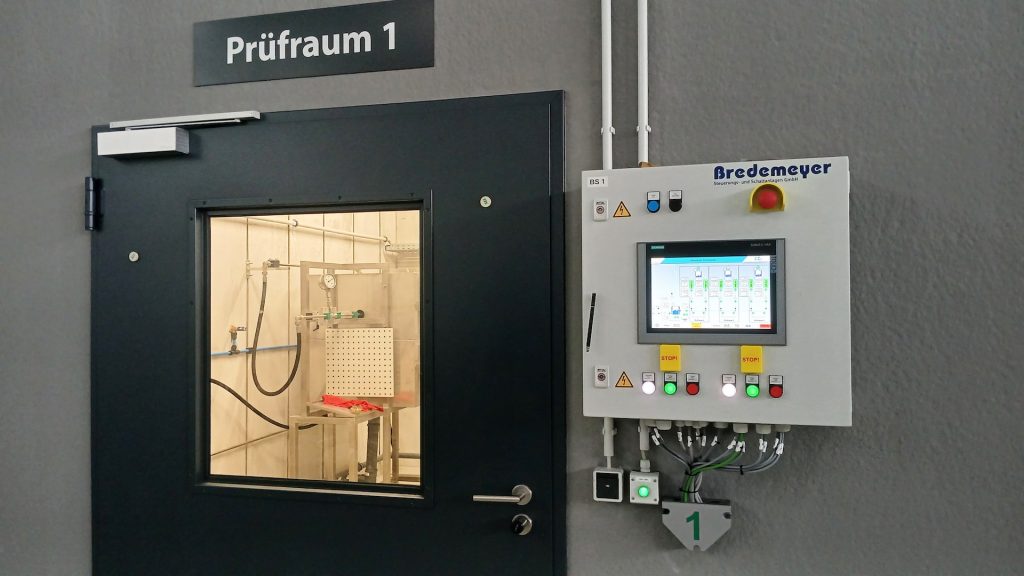
Long-term and service life tests are particularly meaningful. Real operating conditions are simulated over extended periods.
Valves, spray guns, swivels, and other components complete thousands or even millions of switching and load cycles. This makes it possible to accurately evaluate how materials and designs perform throughout the entire product life cycle.
For customers, this means maximum operational reliability and long-term investment security.
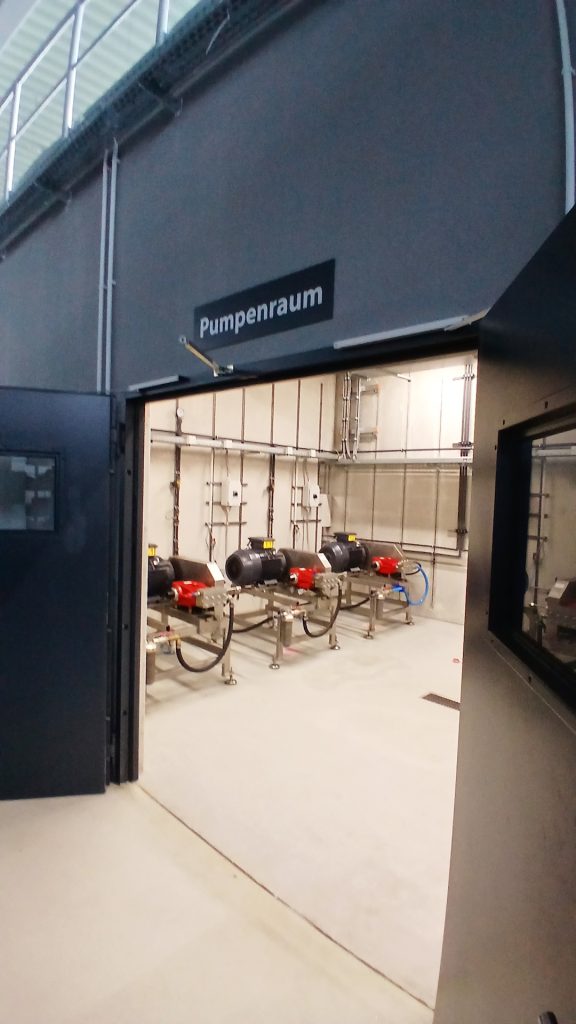
Depending on testing requirements, the facilities operate around the clock — 24 hours a day, seven days a week.
Modern measurement and data acquisition systems continuously record all relevant test parameters. This enables precise evaluation of service life tests and ensures complete traceability of results.
Digital documentation guarantees a high degree of repeatability and allows objective comparisons between different product generations and design variants.
The testing facilities are a central component of Suttner’s corporate philosophy. Because development, production, and quality assurance work closely together, insights gained from testing can be implemented immediately.
New ideas quickly move into practical application, improvements can be verified directly, and products are continuously optimized. These short communication paths are a significant advantage of manufacturing in Germany.
High-quality products do not happen by chance. They are the result of experience, advanced manufacturing, and rigorous quality control. In Suttner’s testing facilities, products are tested, analyzed, and further developed under real-world and extreme conditions.
The result is durable, safe, and high-performance high-pressure components — developed, manufactured, and tested in Germany.