Drone Cleaning
Industrial Drone Cleaning
Professional drone cleaning combines high-pressure technology, foam pre-treatment and unmanned aerial systems (UAS). The range of applications is diverse, from facade cleaning and photovoltaic systems and greenhouses to the de-icing of high-voltage power lines.
R+M / Suttner supplies all perfectly coordinated components from a single source: from the pump, injector and hose to the nozzle.
Overview
Clean at Height, Safe on the Ground
Facades, roofs and solar modules can be cleaned efficiently and safely with a drone, without the need for scaffolding. In many applications, the process replaces aerial work platforms and rope access equipment.
This shift is driven by the shortage of skilled workers and increasing safety requirements. With drones, cleaning companies can reach typical working heights of 30 to 40 metres while operating from the ground and avoiding the time-consuming setup and dismantling.
As a system supplier, R+M / Suttner provides all perfectly coordinated components from a single source, from the pump, injector and hose to the nozzle. This allows you to achieve precise results at height while maintaining safety at the ground station.
What it involves:
- High-pressure cleaning combined with foam pre-treatment, applied by drone
- Typical working height: 30 to 40 metres
- Cleaning without scaffolding, aerial work platforms or rope access, operated safely from the ground
- Complete system from a single source: from the pump to the nozzle, R+M / Suttner supplies all components perfectly coordinated, so nothing needs to be bought separately
 AI generated
Applications
One Process, Many Applications
The drone is particularly effective where conventional technology involves considerable effort or cannot be used at all, for example for facade cleaning, photovoltaic and solar cleaning, or de-icing high-voltage power lines.
 AI generated
Facade Cleaning
Glass and industrial facades at great heights, without scaffolding or an aerial work platform. Foam pre-treatment combined with high pressure delivers a clean result across large surfaces.
 AI generated
Photovoltaic & Solar Cleaning
Dirty modules reduce yield. The drone cleans solar surfaces on rooftops and ground-mounted installations – across large areas, gently and without stepping on the sensitive modules.
 AI generated
De-icing High-Voltage Power Lines
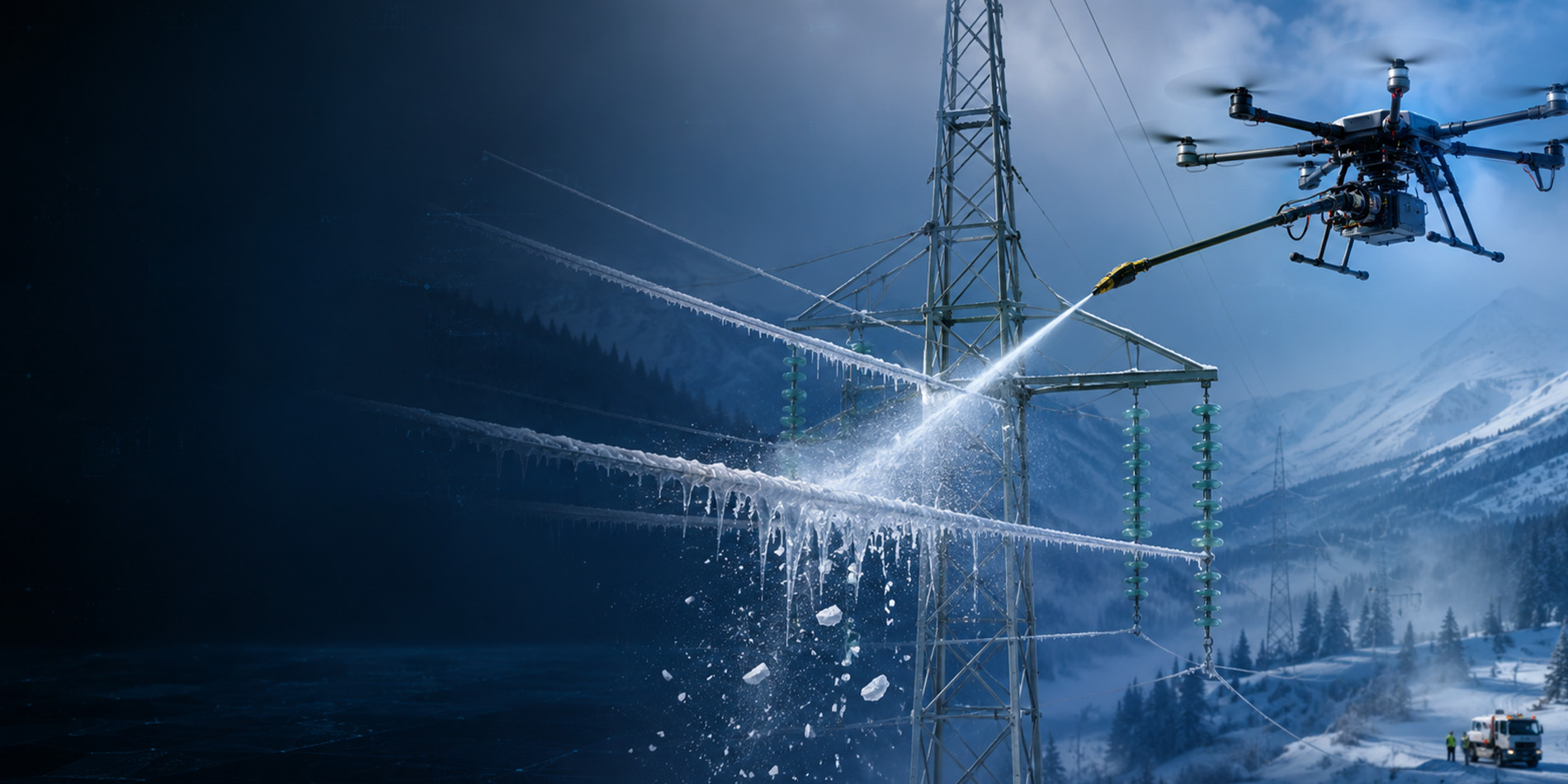
A high-pressure long-range nozzle removes ice from the conductor wire from a safe distance – without contact, while the line remains in operation and without shutting down the grid. Kinetic removal prevents conductor breakage and conductor galloping while protecting towers and insulators.
 AI generated
Other Surfaces: Greenhouses, Roofs, Industrial Glass
The process is also suitable for roofs, greenhouses and extensive industrial glass surfaces – wherever setting up other equipment would be uneconomical.
Learn more in our specialist articles: Facades, Roofs and Photovoltaics · De-icing High-Voltage Power Lines
Your Benefits
Why Drone Cleaning?
Greater safety, less effort, better cost-effectiveness.
The most important benefit is safety. Working at height is one of the most common causes of serious workplace accidents. With drone cleaning, personnel remain on the ground. Sensitive surfaces such as solar modules or roof tiles are not walked on and are therefore not damaged.
The process also offers economic benefits. There is no need for scaffolding or an aerial work platform, and therefore no rental, transport or time-consuming setup and dismantling. Surfaces can be reached faster, operating times are reduced, and a small team on the ground is all it takes. This means even larger projects can be completed with fewer personnel.
 AI generated
Safety
Operation from the ground, no work at height, significantly improved safety performance.
No Scaffolding
No rental, no transport, no setup or dismantling of scaffolding or aerial work platforms.
Cost-Effective
Faster surface coverage, shorter operating times, fewer personnel per project.
Gentle
Extensive, controlled cleaning, also suitable for sensitive surfaces such as PV modules.
From a Single Source
Coordinated components and consulting from R+M / Suttner.
30–40 m
working height, controlled by a small team on the ground, without scaffolding, aerial work platforms or rope access.
Technology & How It Works
How Drone Cleaning Works
Precision technology, from the pump to the nozzle.
Reliably bringing water and cleaning agents to the drone at a height of 30 to 40 metres is a genuine technical challenge. Four factors determine a good result: foam formation, the drone's force balance, pressure loss over height and through the line, and control from the ground.
All figures on this page refer to a typical example system with 170 bar and 14 l/min – i.e. a motor pump as used in practice for drone cleaning. For different systems, the values will vary accordingly; we can calculate your specific application on request.
Foam Formation: Injector and Foam Nozzle
The bypass injector easyfoam365+® ST-167 draws in the cleaning chemical and mixes it into the water flow. The actual foam is only created at the ST-75 foam nozzle on the drone: air is added to the mixture there, turning the chemical-water solution into a stable foam. The foam adheres to the surface and thereby extends the contact time. The visible foam film also gives the operator an indication of which areas have already been wetted – it does not replace monitoring of the cleaning progress.
Injector & Back Pressure
For the injector to draw reliably, it needs a significant pressure drop downstream – and under demanding conditions: the drone is suspended from a long, lightweight and comparatively thin hose, so the system has to overcome considerable friction and gravity. This requires special injectors with extremely high back-pressure tolerance. At a height of 40 metres, the system loses around 4 bar of pressure due to the height difference alone, without taking hose friction into account. A high-quality injector reliably transports the chemical-water mixture over these distances without interrupting the foaming process or damaging the ground equipment.
Force Balance & Thrust
Stable flight is only possible when lift, gravity, recoil and the weight of the material are in balance. The recoil from the spray jet (approx. 24 N at 14 l/min and 53 bar) must be compensated for by the rotors without pushing the drone to its performance limit.
Height, Pressure Loss & Hose Routing
At a height of 40 metres, pressure loss due to height alone is around 4 bar, with additional losses occurring along the line. Ideally, the high-pressure hose is routed from above to the drone. This can save at least 50 percent of the weight force, while the hose also serves as a safety line. Lightweight components provide additional benefits: the lightweight ST-415 rotary nozzle is around 200 g lighter than a brass rotary nozzle.
Ground Control: The Foot Switch
The professional standard is a high-pressure foot switch at the ground station (ST-540). It allows the operator or a second technician to switch the water flow on and off immediately. By separating flight control from hydraulic control, the team can handle the considerable recoil forces much more effectively: when the high-pressure water flow is activated, the drone experiences backward thrust. Using the foot switch, the pilot can anticipate this movement and focus exclusively on the control sticks – a prerequisite for smooth, stable flight along the facade.
 AI generated
Key Figures at a Glance
- Example system: 170 bar, 14 l/min
- Typical working height: 30 to 40 metres
- Pressure loss due to height alone: approx. 4 bar at 40 m
- Recoil from the spray jet: approx. 24 N (at 14 l/min and 53 bar)
- Hose routing from above: up to 50 percent less lifting force
- Lightweight ST-415 rotary nozzle: approx. 200 g lighter than a brass rotary nozzle


Products & Equipment
The Right Equipment, from Pump to Nozzle
Coordinated components, available directly from the online shop.
R+M / Suttner offers all components for industrial drone cleaning, coordinated with each other and designed for use on the drone. Configure your system to suit your requirements, from the motor pump and injector, valves and lightweight high-pressure hoses to the nozzle.
Go to the “Drone Cleaning” shop category
Featured
Lightweight ST-415 Rotary Nozzle
Specially developed for drones. The housing made of glass-fibre-reinforced plastic with a ceramic insert makes the nozzle more than 50 percent lighter than conventional brass rotary nozzles (around 200 g saved). Less weight means more payload, greater working height and longer operating times. The rotating, sharp-pointed jet also removes stubborn dirt from a safe distance from the facade.
Spray angle 20°, inlet 1/4" female thread, max. 80 bar, max. 60 °C, max. flow rate 17 l/min. Available in various nozzle sizes.
View ST-415 in the Shop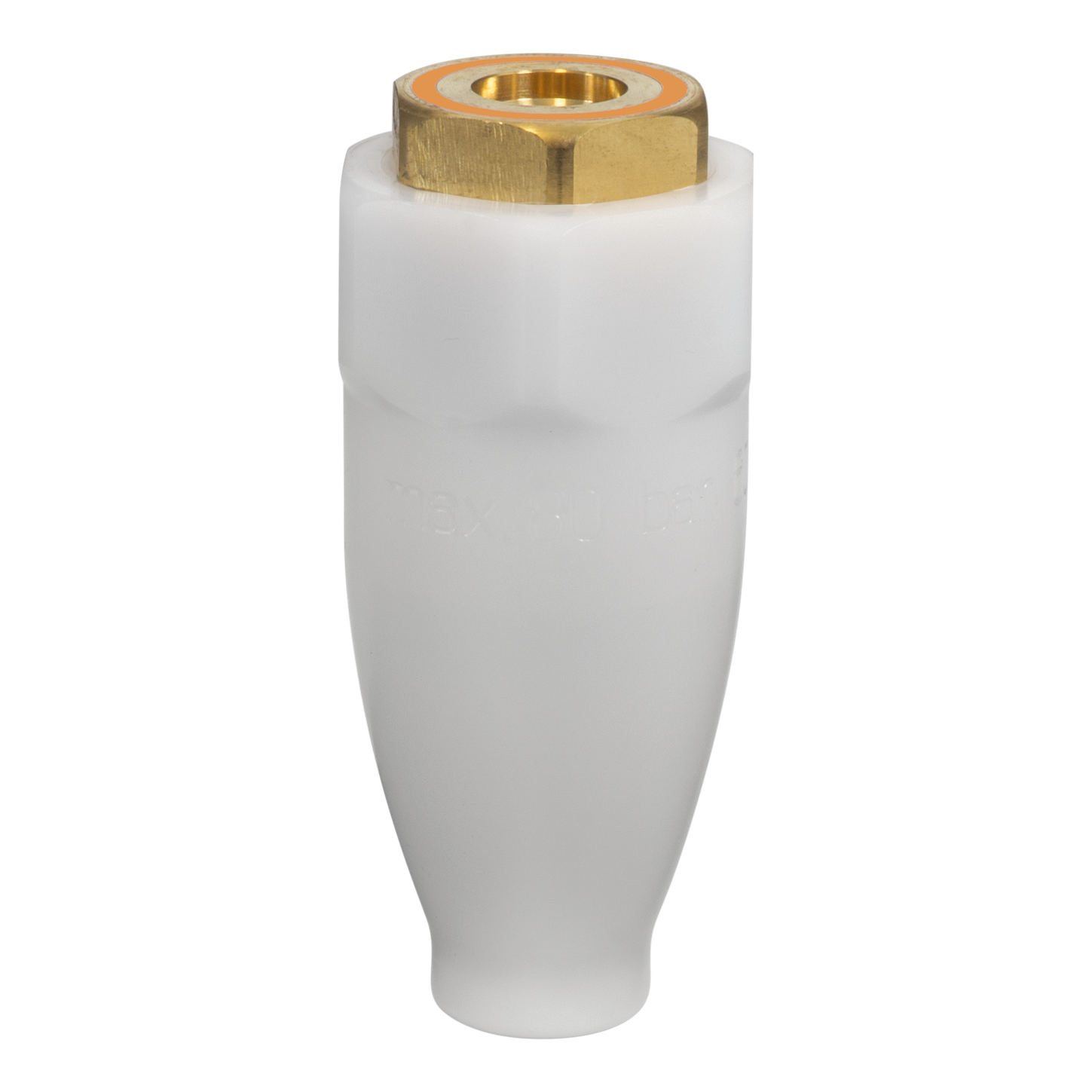
Lightweight ST-415 Rotary Nozzle
Turbo nozzle, specially developed for drones, more than 50% lighter than a brass rotary nozzle. Listed in the shop as “Rotary nozzle ST-415”.
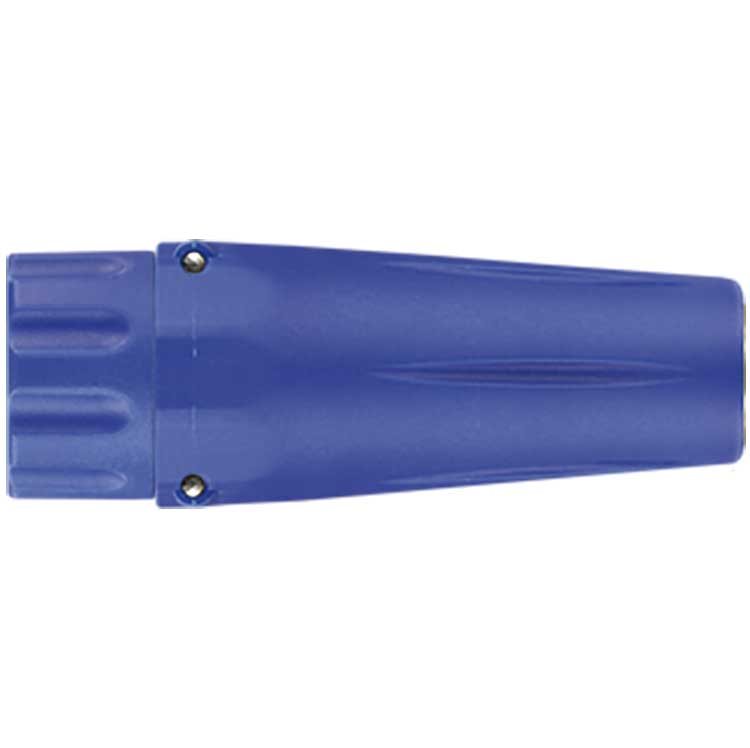
ST-75 Foam Nozzle
Mounted on the drone, it mixes in air to create foam.
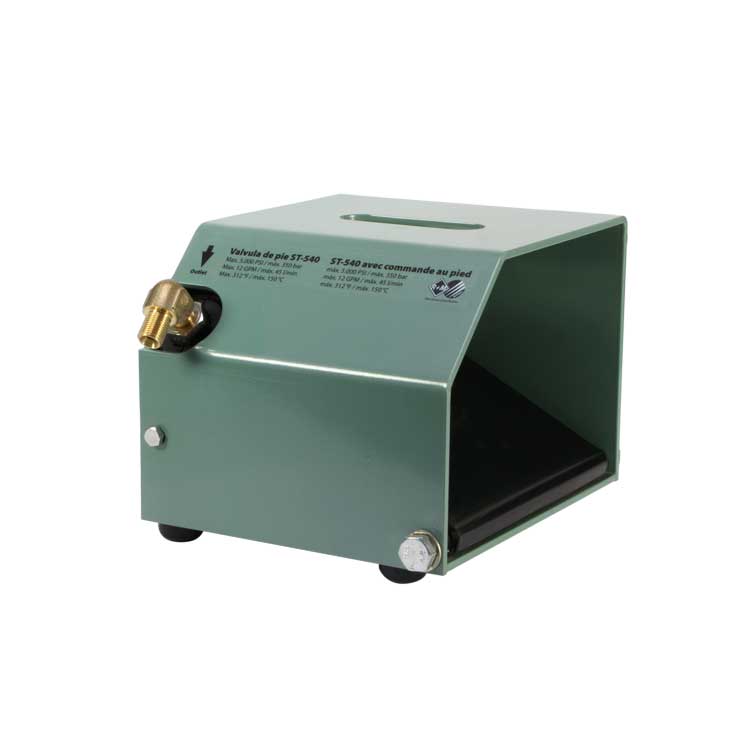
ST-540 Foot Switch
Switches the water flow at the ground station, independently of flight control. Up to 350 bar.
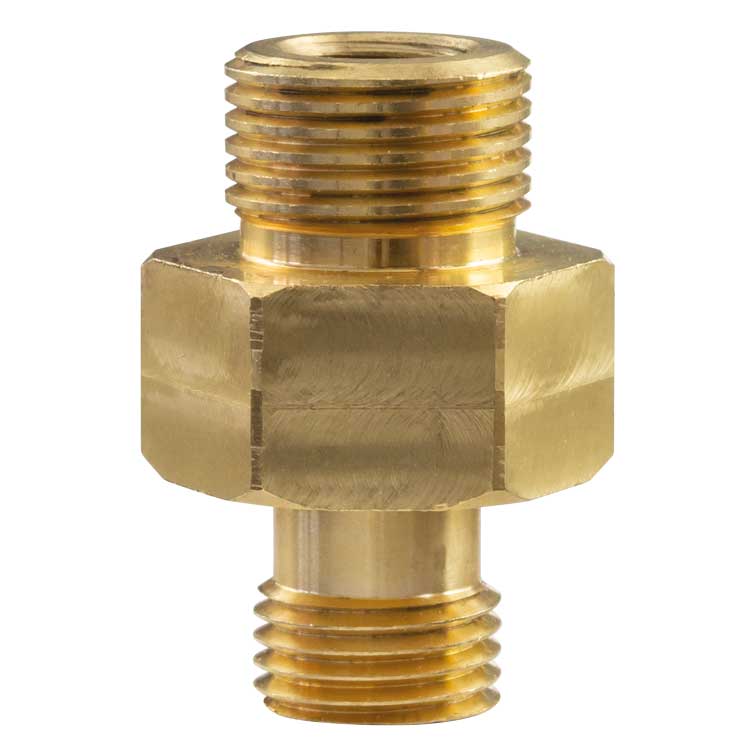
easystart Valve
Delays the pressure build-up when the pump starts. Brass.
Consulting & Downloads
Technology and Expertise, from Consulting to Nozzle
Are you planning to get started with drone cleaning or looking to optimise your existing system? We advise you on the right configuration and, if required, calculate your specific application.
Consulting & System Design
We help with calculations and selection. info@rm-suttner.com
Request Consulting